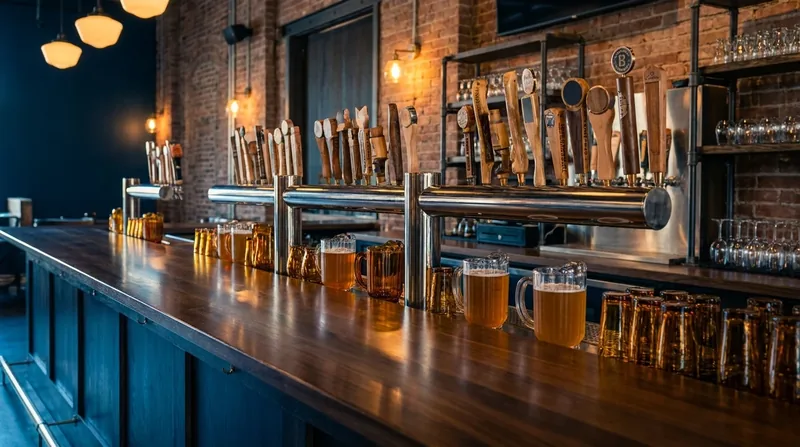
How to Start a Bar or Tavern in Nebraska: Class C at $300 Local Fee, Manager Voter Registration, Sunday Hours and the 2.5% Omaha Tax
How to Start a Bar or Tavern in Nebraska: Class C at $300 Local Fee, Manager Voter Registration, Sunday Hours and the 2.5% Omaha Tax
Opening a bar in Nebraska takes more than one filing. You form a business entity with the Nebraska Secretary of State, register with the Department of Revenue, and then apply to the Nebraska Liquor Control Commission (NLCC) for the alcohol license itself. Nebraska has no general state business license, so the Nebraska bar license is usually the permit that sets your opening date. This guide follows the order most applicants handle the work, with the fees we can verify and clear flags wherever you need to confirm a figure with the agency.
Informational content only. This article is not legal or tax advice. Liquor licensing, zoning and taxes depend on your city, your ownership structure and your premises. Speak with a Nebraska attorney who handles liquor licensing and a CPA before you sign a lease, buy equipment or commit money.
What You Need Before You Start
Gather these items before you file anything. The NLCC application cannot be completed without most of them, and some take weeks to obtain.
- Entity formation documents. A Certificate of Organization for an LLC or Articles of Incorporation for a corporation, filed with the Secretary of State for $100.
- A registered agent. Nebraska requires one for every LLC and corporation. The agent must be a Nebraska resident or an entity authorized to do business in the state, and the agent's office must match the registered office.
- Premises documents. A signed lease or a deed for the building.
- A premises diagram. A floor plan showing the bar area, service areas and entrances.
- A business plan and opening inventory. NLCC asks for both.
- Fingerprint cards. One each for the president, the manager, every owner with more than 25% interest, and the participating spouse.
- Manager and spouse identity and voter records. A birth certificate or passport, plus a Nebraska voter registration.
- Funds. The $400 nonrefundable NLCC application fee, the annual retail fee and the $75 NSP check.
Fees at a Glance
| Item | Amount | Paid to | Notes |
|---|---|---|---|
| LLC Certificate of Organization | $100 | Nebraska Secretary of State | Plus newspaper notice (Step 2) |
| NLCC application fee | $400 | NLCC | Nonrefundable |
| Class C all-liquor annual fee | $300 | City or village treasurer (county treasurer outside city limits) | Neb. Rev. Stat. 53-124.01 |
| Class I on-premises annual fee | $250 | Same as above | Alternative license class |
| Class A beer on-premises annual fee | $100 | Same as above | Alternative license class |
| NLCC renewal fee | $45 | NLCC | Neb. Rev. Stat. 53-131 |
| NSP criminal history check | $75 | Nebraska State Patrol | Applies from September 1, 2026; confirm the per-person count with NLCC |
| LLC biennial report | $25 online, $30 on paper | Secretary of State | Odd-numbered years |
| Omaha restaurant and drinking-place occupation tax | Reported at 2.5% | City of Omaha | Confirm the current rate with Omaha Finance |
Step 1: Confirm the Location and Zoning Before You Sign
Start with the building, not the paperwork. The NLCC application requires a lease or deed, and the property has to allow a tavern. Nebraska has 93 counties and 528 municipalities (cities and villages), and your address decides who collects your license fee and who controls zoning.
If the building sits inside city or village limits, the annual retail fee goes to that city or village treasurer. Outside city limits, it goes to the county treasurer. Ask the local zoning office in writing whether a tavern is a permitted use at the address and whether conditions apply to hours, parking or outdoor areas. Make your lease contingent on both that written answer and NLCC approval.
Check the local field too. The NLCC roster for October 2026 lists 2,417 active licenses of all classes in Omaha and 1,070 in Lincoln. Those counts do not show demand on your block, but they show how crowded the market already is.
Step 2: Form Your Entity and Register Any Trade Name
Most bars operate as an LLC or a corporation, though you should choose your structure with your attorney and CPA. Here is what the Secretary of State requires for each.
- LLC. File a Certificate of Organization for $100. The name must contain limited liability company or limited company, or the abbreviation LLC, L.L.C., LC or L.C. It cannot be the same as or deceptively similar to a name already on record. If you need time, a name reservation costs $30 and lasts 120 days.
- Corporation. File Articles of Incorporation for $100. The state issues no form, so you draft the document, and it can be submitted through eDelivery.
- Trade name. If the bar will operate under a name other than the entity name, register it with the Secretary of State. The fee is $100 online through eDelivery or $110 in person or by mail, with a $110 renewal. Registration lasts 10 years, and a separate newspaper publication is required.
Both LLCs and corporations must publish a notice in a legal newspaper for three successive weeks and file proof with the Secretary of State. Publication costs vary by newspaper, so request a quote before you assume a figure. Nebraska also requires every LLC to keep a registered agent and office in the state (Neb. Rev. Stat. 21-113). Losing your agent can lead to administrative dissolution, and changing the agent or office costs $25 online or $30 on paper.
Put the recurring deadlines on your calendar now. LLC biennial reports are due January 1 to April 1 of odd-numbered years, and the company is administratively dissolved if the report is delinquent after June 16. Corporations file a biennial report and occupation tax due March 1 of even-numbered years, delinquent after April 15. Find your entity at the Nebraska Secretary of State business search and file through the Business Services Division pages.
Step 3: Register With Revenue and Labor
Nebraska registers businesses by activity. A bar that makes retail sales needs a Nebraska sales and use tax permit, and you apply through the Department of Revenue online registration page. Your Department of Revenue registration, often called your Nebraska ID, covers sales tax and withholding. The state sales tax rate is 5.5%. Cities may add their own sales taxes, so confirm with the Department which of your sales are taxable and which local rates apply to your address.
If you hire employees, add an income tax withholding certificate through the Department of Revenue. Register with the Department of Labor for unemployment tax at the same time. Professional or municipal licenses may still apply to you, so ask your city clerk what else the bar needs.
Step 4: Schedule Fingerprints and Manager Voter Registration
This step delays more applications than any other, so start it early. Fingerprint cards are required for the president, the manager, every owner with more than 25% interest, and the participating spouse. The NSP check costs $75 for filings made from September 1, 2026 onward. Confirm with NLCC how many checks your group needs and whether any submission has to go through a particular process.
The manager has extra paperwork. The manager and spouse each provide a birth certificate or passport and a Nebraska voter registration. If your manager is not yet registered to vote in Nebraska, complete that first. An application without it is incomplete, and an incomplete file is the most common reason for delay.
Step 5: Assemble and Submit the NLCC Application
File through the NLCC POSSE portal. Build the package before you open the portal so you can upload everything in one session:
- The signed lease or deed
- The premises diagram
- The business plan
- The opening inventory
- Owner information, including each owner above 25% so NLCC can match them to fingerprint cards
Pay the $400 application fee only after you have checked the package against NLCC's requirements. The fee is nonrefundable, so a fee paid on an incomplete file does not come back.
Step 6: Clear Local Review and Pay the Annual Fee
NLCC works with the city or county that grants retail licenses, so local review is part of the process. Ask your city clerk or county clerk which local steps apply and how long they usually take. Ask NLCC and the local clerk for a current processing time in writing.
Your license class sets the annual fee under Neb. Rev. Stat. 53-124.01. A Class C all-liquor license is $300, a Class I on-premises license is $250, and a Class A beer on-premises license is $100. Pay the fee to the city or village treasurer, or to the county treasurer if you are outside city limits. Choose your class based on what you plan to sell, and confirm it with NLCC before you file.
Step 7: Budget for Omaha's Occupation Tax
If your bar is in Omaha, budget for the restaurant and drinking-place occupation tax. Omaha has levied it at a rate reported as 2.5% since 2010. Local rates can change, so confirm the current rate with Omaha Finance before you build your operating model. Do not carry forward an old figure from another source.
Step 8: Plan Your Hours and Staffing
Nebraska restricts alcohol sales hours. Under Neb. Rev. Stat. 53-179, sales are not allowed from 1 a.m. to 6 a.m. or from 6 a.m. Sunday to 1 a.m. Monday, unless a local ordinance allows it. The Sunday window is the rule owners most often miss. Check the ordinance that applies to your address before you publish opening hours, plan a Sunday brunch or book a Sunday event. Get the window confirmed in writing from your city clerk and NLCC.
On staffing, servers may be 19. NLCC approves server-seller training. Ask NLCC whether your license requires it and who must complete it before your staff serves alcohol.
Step 9: Permit the Build-Out
Construction work triggers its own licensing. The State Electrical Division licenses electricians, so your electrical contractor must hold that license. Plumbers are licensed by the city or village nearest the job, so confirm the plumbing license with that local government. If you serve food, confirm which agency or local health office issues your food permit for the location. Your city or county also handles zoning and may require building or fire inspections before you open.
Step 10: Set Promotions Within NLCC Rules
Design your drink specials before you print menus. NLCC Rule 019.01U prohibits bottomless drink promotions and two-for-one-price promotions. A happy hour or a special built on a different structure is still worth reviewing with NLCC before launch, so you know where the line sits for your concept.
Tips for a Smoother Application
- Start the manager's and spouse's documents before you sign a lease. Those records are the easiest items to delay.
- Keep one folder with every document, receipt and confirmation email. Reviewers ask for the same items more than once.
- Get written answers on zoning, Sunday hours, server training and license class. Phone conversations do not create a record you can rely on later.
- Budget for the $400 application fee, the annual fee, the $75 NSP check and the entity filing costs, plus the Omaha tax if it applies.
- Ask the Nebraska Business Development Center at the University of Nebraska at Omaha for planning help, and check the SBA Nebraska district page for local resources.
Common Mistakes to Avoid
- Signing a lease without contingencies. Make approval of zoning and the liquor license a condition of the lease.
- Assuming Nebraska has a general business license. It does not. Your registrations follow your activity, so a sales tax permit and withholding certificate may apply instead.
- Overlooking the Sunday window. Build your schedule, staffing and events around the ordinance for your address.
- Submitting a file without the manager's Nebraska voter registration. Fix this before you file.
- Missing the LLC biennial report. A late report in an odd-numbered year can lead to administrative dissolution, which is hard to reverse on a licensed operation.
- Letting the registered agent lapse. Losing the agent can lead to the same dissolution risk.
- Planning bottomless or two-for-one promotions. NLCC Rule 019.01U prohibits them.
What Results to Expect
No step in this guide guarantees an approval date, a license outcome or a level of sales. Your results depend on your location, the completeness of your file and how local and state reviewers handle it. A complete, accurate package can help you avoid the back-and-forth that slows many applications, and clear answers on zoning and hours can reduce the risk of compliance problems after you open. Treat the fees and deadlines here as a starting checklist, and confirm each one with the agency that administers it before you commit money.
Next Steps
Begin with the location and zoning letter, then form your entity and schedule the fingerprint and voter registration work. Those three items control most of your timeline. Because liquor licensing, zoning and tax rules depend on your facts, review the plan with a Nebraska attorney and a CPA before you sign anything. This article is informational only and is not legal or tax advice.
Keep exploring: related Nebraska guides
- How to Start a Bakery Business in Nebraska
- How to Start a Catering Business in Nebraska
- Food Trucks in Nebraska by City
- How to Start a Coffee Shop Business in Nebraska
- Nebraska Liquor License Guide
- How to Start an LLC in Nebraska
- Nebraska Business License
- How Much Does It Cost to Start a Business in Nebraska
- All Nebraska business types
- Every Nebraska guide in one place