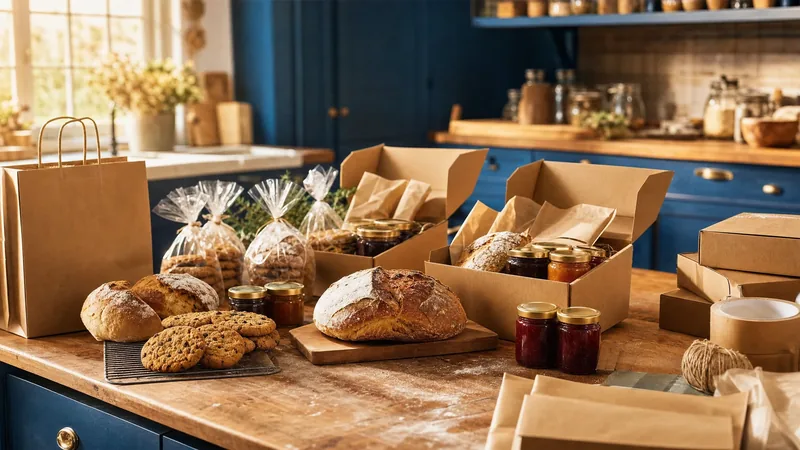
How to Start a Cottage Food Business in Nebraska: Free NDA Registration, No Sales Cap and Some Refrigerated Foods Allowed Since 2024
How to Start a Cottage Food Business in Nebraska: Free NDA Registration, No Sales Cap and Some Refrigerated Foods Allowed Since 2024
If you bake bread, make jam or blend spices at home, Nebraska law lets you sell those foods to the public without renting a commercial kitchen. Many people search for a Nebraska cottage food license or a cottage food permit in Nebraska, but the state does not issue either one. What you do is register with the Nebraska Department of Agriculture (NDA). The registration is free, the statute sets no annual revenue cap, and the 2024 amendment (LB262) opened the door to some foods that need refrigeration, under conditions.
This guide covers what to gather, how to register, the rules that catch people off guard, and what results to realistically expect. It is informational content, not legal or tax advice. The disclaimer at the end explains the limits.
What Nebraska Cottage Food Registration Covers
A cottage food operation is a home-based food business that makes approved foods in a private home and sells them directly to the person who will eat them. Three features define it:
- A private home kitchen. The food is made in your home, not in a licensed commercial facility.
- Direct sales only. You sell to the consumer, at a farmers market, from your home, or by delivery or mail where the product type allows it. Selling to a coffee shop, restaurant or grocery store for resale is outside the cottage food rules.
- Registration with NDA. You register with the Department of Agriculture before your first sale. The statute sets no fee for the registration.
State cottage food rules preempt local food ordinances, so a city or county cannot layer its own food rules on top of a registered operation. Zoning, taxes and other local requirements still apply, and they are covered in the steps below.
Materials and Information You Need Before You Start
Gather these items before you register. Having them ready keeps the process from stalling halfway through.
- A written product list. Include each item, its full recipe and its complete ingredient list in order.
- Draft labels. Each label needs your producer name, your mailing address and the ingredients.
- Contact information. Your name, home address and phone number, which the registration asks for.
- A food safety course certificate from an accredited or NDA-approved course, once you finish it.
- Well water test results if your home uses a private well.
- A business name decision. You can sell under your legal name or under a registered trade name. See Step 8.
- Zoning contact information. Your city, village or county planning or zoning office, since home business rules vary.
- A recordkeeping system. A spreadsheet or notebook for batch dates, sales and course documentation.
The Steps to Start Your Cottage Food Business in Nebraska
Step 1: Check each product against the banned list
Start with the product list, not the registration form. Nebraska bans the following from cottage food operations:
- Animal parts
- Fluid milk or milk products
- Raw eggs
- Unpasteurized juice
- Infused oils or infused honey
- Sprouts
- Canned low-acid foods
- Tofu and tempeh
- Kimchi, kombucha and similar ferments
Fully cooked cakes made with eggs are allowed, because the eggs are cooked as part of the finished product. Dairy-based items need extra care. Because fluid milk and milk products are banned, check NDA's FAQ before you make anything built on dairy, such as custards or cheesecakes. If a product sits near the line on the banned list, ask NDA in writing and keep the answer.
Step 2: Decide whether your products are TCS or non-TCS
Food safety rules sort foods by whether they need time and temperature control for safety, known as TCS foods. TCS foods are those that can support harmful bacteria growth unless kept at controlled temperatures, such as cream-filled items and some refrigerated preparations. Non-TCS foods, such as many breads, cookies and shelf-stable jams, are generally easier to sell under the rules. Confirm the classification of each product with NDA.
The sales channel depends on this distinction:
- TCS foods may be sold only in person. They must also be transported within two hours.
- Non-TCS foods may be shipped.
This is the biggest decision in your business model. If you want to ship online, plan your product line around non-TCS items.
Step 3: Complete an approved food safety course
Before you make any sales, complete a food safety course from an accredited provider or one approved by NDA. Keep the certificate, because the registration asks for the course name and completion date. Course fees vary by provider, so compare options and check that the course is on the approved list before you pay.
There is one exception. Sellers of non-TCS foods at farmers markets do not need the food safety course or the well water test. Confirm that this exception fits your situation with NDA and with the market manager before you rely on it.
Step 4: Test your private well if you use one
If your home uses a private well, have the water tested before you register. Keep the results with your registration paperwork. Homes on a municipal water system skip this step.
Step 5: Register with the Nebraska Department of Agriculture
Find the cottage food registration on the NDA website and confirm whether it is submitted online or by mail. The form asks for:
- Your name, home address and phone number
- The name of the food safety course you completed
- The date you completed it
- Well water test documentation, if applicable
Double-check every field. A wrong course date or a missing address can delay the paperwork, and you should not start selling until your registration is complete.
Step 6: Set up your kitchen notice and labels
Cottage food sellers must display a clearly visible notice that the food was prepared in a kitchen that is not subject to regulation and inspection by a regulatory authority and may contain allergens. For market or event sales, provide it at the sale location. For pickup or delivery sales, provide it at your home, on your website if you have one, and in any advertising for those sales. Confirm the required wording with NDA. A notice along these lines is a reasonable starting point:
This food was prepared in a kitchen that is not subject to regulation and inspection by a regulatory authority. It may contain allergens.
Every label needs your producer name and mailing address. For TCS foods, list the ingredients in descending order. Print a label sample for each product, and keep copies with your records so you can show exactly what each buyer received.
Step 7: Handle sales tax and other state registrations
Nebraska has no general state business license. Registration follows activity instead. If you make retail sales, you need a Nebraska sales and use tax permit from the Nebraska Department of Revenue. The state sales tax rate is 5.5%, and city sales taxes may also apply. Ask the Department of Revenue whether your specific products are taxable before you set your prices, since some food items are treated differently from others.
Apply for the permit online through the Department of Revenue's business registration page at https://revenue.nebraska.gov/businesses/register-your-new-business-online. If you hire anyone, you also need an income tax withholding certificate from the Department of Revenue and must register with the Nebraska Department of Labor for unemployment tax. Contact the Department of Labor before your first hire.
Step 8: Choose your business name and whether you need a filing
You have three basic options:
- Sell under your legal name. A sole proprietor using a personal name generally needs no Secretary of State filing.
- Register a trade name. If you sell under a name other than your own, file an Application for Registration of Trade Name with the Nebraska Secretary of State at https://sos.nebraska.gov/business-services/corporate-and-business. It costs $100 online through the eDelivery portal or $110 in office or by mail, and a separate newspaper publication is required. Proof of publication carries no fee. A registered trade name lasts 10 years, and the renewal fee is $110.
- Form an LLC. A limited liability company is a separate legal entity, and it is more involved. The Certificate of Organization carries a $100 filing fee. The name must contain words such as limited liability company or the abbreviation LLC. New LLCs must publish a notice in a legal newspaper for three successive weeks and file proof of publication with the Secretary of State. You must also designate a registered agent, the Nebraska term for the person or business that receives legal papers for the company. The LLC files a biennial report in odd-numbered years, due between January 1 and April 1, at a $25 online fee or $30 on paper. Reports filed after June 16 are delinquent, and the company can be administratively dissolved.
Forming an LLC does not change your cottage food registration. The registration is still made with NDA, and the LLC still needs its own tax and permit setup.
Step 9: Check city and county zoning
Nebraska has 93 counties and 528 municipalities, which include cities and villages. Zoning and home occupation rules are set locally, so the rules in your neighborhood may differ from those across town. Contact your city or village zoning office, or your county zoning office if you live outside city limits. Ask specifically about:
- Whether home businesses are allowed in your zoning district
- Limits on customer visits, parking or signs
- Whether you can have employees or deliveries at your home
- Any local business or occupation tax that applies to your sales
Getting zoning approval before you buy supplies saves you from having to shut down or relocate later.
Step 10: Keep records from day one
Keep a file for each product that includes the recipe, the ingredient list, the label you used and the batch date. Keep your course certificate, well water results, NDA registration confirmation and sales tax permit together. A simple sales log with date, product, quantity and buyer type will also help when you file sales tax returns.
What to Expect From a Nebraska Cottage Food Business
Results vary widely. Some sellers begin with a few sales at a farmers market or to neighbors and friends. Others build a steady customer base through repeat orders and word of mouth. The registration does not guarantee sales, income or any particular growth rate, and most small food businesses take time to find their audience.
A realistic first year may include learning which products sell, adjusting recipes and prices, and tracking your costs. Expect your costs to include ingredients, packaging, labels, course fees, any permits and your time. Compare those costs with your sales before you decide whether the business is worth expanding.
Be careful with what you claim about your products. Avoid health or medical claims on labels and marketing. Describe the food and its ingredients instead, and keep wording accurate and measured.
Common Mistakes to Avoid
- Selling to a store or café. Wholesale sales for resale fall outside the cottage food rules.
- Shipping TCS foods. TCS foods may be sold only in person, and they must be transported within two hours.
- Selling before you finish the steps. Complete the course and the NDA registration before your first sale.
- Making a banned item by accident. Infused honey, fluid milk products and raw egg preparations are common surprises.
- Skipping the allergen notice. The kitchen notice is required, not optional.
- Ignoring the private well requirement. If you use a private well, submit the water test with your registration.
- Assuming no cap means no taxes. The absence of a revenue cap does not remove sales tax or income tax obligations.
- Using a business name without a filing. A name other than your own usually requires a trade name registration.
- Skipping the zoning check. A home business that violates local zoning can be forced to stop.
Practical Tips
- Start with a narrow product list. Three to five items are easier to make safely, label correctly and track than a long menu.
- Get NDA answers in writing. For any gray-area product, ask NDA to confirm in writing and keep the response with your records.
- Print labels before you need them. Having a label template ready prevents rushed or incomplete labels at market.
- Batch and date every run. A batch log helps if a buyer has a question about a specific product.
- Price with taxes in mind. Confirm your sales tax treatment before you publish prices.
Where to Get Help
- Nebraska Department of Agriculture: the agency that handles cottage food registration, approved courses and product questions. Find the cottage food page on the agency website.
- Nebraska Secretary of State, Business Services Division: trade names, LLC filings and business name searches at https://sos.nebraska.gov/business-services/corporate-and-business
- Nebraska Department of Revenue: sales tax permits, withholding and tax questions at https://revenue.nebraska.gov/
- Nebraska Business Development Center (Nebraska SBDC): free business advising through the University of Nebraska at Omaha at https://www.unomaha.edu/nebraska-business-development-center/business-start-and-growth/index.php
- SBA Nebraska District Office: additional small business resources at https://www.sba.gov/district/nebraska
For a complex situation, such as an LLC with employees, a product line that includes dairy or a plan to sell across state lines, talk with a qualified attorney and a CPA before you commit.
Disclaimer
This article is informational content about starting a cottage food business in Nebraska. It is not legal, tax or food safety advice, and it does not create an attorney-client or accountant-client relationship. Rules, fees and agency procedures can change. Confirm current requirements with the Nebraska Department of Agriculture, the Secretary of State and the Department of Revenue before you make a sale, and consult a qualified attorney or CPA for your specific situation.
Keep exploring: related Nebraska guides
- How to Start a Coffee Shop Business in Nebraska
- How to Start a Craft Brewery, Farm Winery or Distillery in Nebraska
- How to Start a Catering Business in Nebraska
- How to Start a Farmers Market or Farm Stand Business in Nebraska
- Nebraska Liquor License Guide
- How to Start an LLC in Nebraska
- Nebraska Business License
- How Much Does It Cost to Start a Business in Nebraska
- All Nebraska business types
- Every Nebraska guide in one place