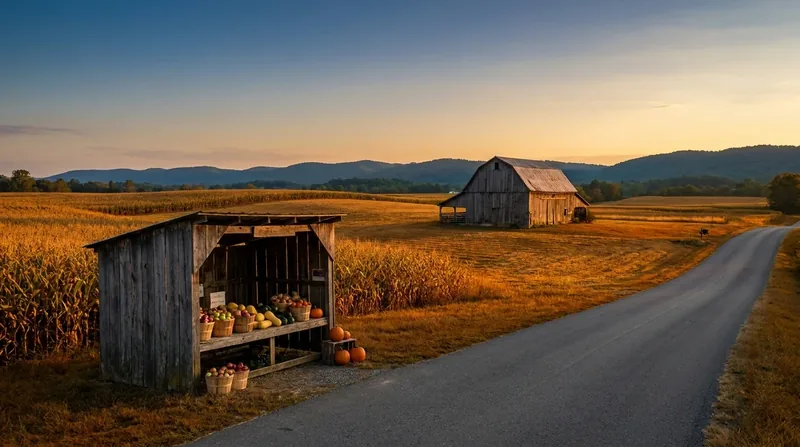
How to Start a Farmers Market or Farm Stand Business in Nebraska: Whole Produce Outside the Food Permit and Method-of-Sale Rules
How to Start a Farmers Market or Farm Stand Business in Nebraska: Whole Produce Outside the Food Permit and Method-of-Sale Rules
If you want to sell fruits and vegetables at a farmers market or from a roadside stand, Nebraska's startup paperwork is lighter than most people expect. A stand that sells only whole, uncut fresh fruits and vegetables is not a food establishment, so it does not need a food permit from the Nebraska Department of Agriculture (NDA). What you do need is a plan for taxes, your business name, local zoning, and the method-of-sale rules that govern how you weigh, price, and label what you sell.
This guide covers how to start a farmers market vendor business in Nebraska, step by step. It also explains where the rules change if you sell eggs, home-prepared foods, or cut produce.
Informational content only. This article is not legal or tax advice. Rules change, and the agencies named here have the final word on your situation. If you plan to form an LLC, hire employees, or lease land for a stand, talk with a qualified attorney or CPA before you commit money.
What You Need Before You Start
Gather these items before your first market day:
- A decision on ownership: sole proprietorship or LLC (see Step 1)
- Your legal name, plus a trade name if you will sell under a different name
- A Nebraska Department of Revenue Nebraska ID and a sales and use tax permit, if you make retail sales
- A scale for weighed sales, with a plan to confirm NDA weights and measures rules before you use it
- Product labels for packaged goods showing the product, your name and address, and the quantity
- A written list of every item you plan to sell, split into whole produce and anything cut, mixed, or made at home
- Contact details for the market manager, your city clerk, and your county zoning office
- A separate bank account and a simple sales log
Step 1: Decide Whether You Need an Entity
Most produce vendors start as sole proprietors. You own the business, report its income on your personal return, and file nothing with the Nebraska Secretary of State to sell tomatoes. If you sell under your own legal name, you generally need no trade name filing at all.
An LLC separates your personal assets from business debts, but it adds cost and recurring filings. If you form one, expect the following:
- Formation document: a Certificate of Organization, with a $100 filing fee online or $110 in office.
- Name: the name must include "limited liability company" or "limited company," or an accepted abbreviation such as LLC or L.L.C. It cannot be the same as, or deceptively similar to, a name already on record with the Secretary of State.
- Registered agent: Nebraska calls this role the registered agent. The agent must be an individual residing in Nebraska or another person or entity authorized to do business in the state, and the agent's office must match the registered office. Losing your agent can lead to administrative dissolution. Changing the agent or office costs $25 online or $30 on paper.
- Publication: new LLCs must publish a notice in a legal newspaper for three successive weeks, then file proof of publication with the Secretary of State.
- Name reservation: if you need time to finish paperwork, you can reserve a name for 120 days for $30 using the Application for Reservation (LLC).
- Biennial report: LLCs file in odd-numbered years between January 1 and April 1. The fee is $25 electronically or $30 on paper. A report not filed by June 16 becomes delinquent, and the company can be administratively dissolved.
Tax treatment also matters. An LLC taxed as a pass-through reports its income on the members' Nebraska individual returns, where 2026 rates run from 2.46% to 4.55%. An LLC taxed as a corporation pays the 4.55% Nebraska corporate income tax for tax years beginning on or after January 1, 2026. Nebraska has no franchise tax on LLCs, so the biennial report fee is the only recurring Secretary of State charge. Ask a CPA which treatment fits your numbers.
You can search existing names at the Secretary of State business search, and file documents through the Corporate and Business Document eDelivery portal. Staff review each filing before it is accepted, and the Secretary of State publishes no standard processing time.
Step 2: Register a Trade Name If You Use One
If your stand is called "Prairie Row Produce" rather than your personal name, that is a trade name, and you can register it with the Secretary of State (registration is optional). Trade names are registered with the Nebraska Secretary of State, Business Services Division, on a statewide basis rather than county by county.
- Fee: $100 if filed online through eDelivery, or $110 if filed in office or by mail.
- Duration: the registration lasts 10 years. The renewal fee is $110.
- Publication: a separate newspaper publication is required. The affidavit or proof of publication has no state fee, but the newspaper will charge for the notice, so request its rate before you plan the budget.
Use the Application for Registration of Trade Name form. Register the name before you print signs, banners, or market tags.
Step 3: Get Your Nebraska ID and Sales Tax Permit
Nebraska has no general state business license. Registration follows the activity you conduct. A produce vendor who makes retail sales needs a sales and use tax permit through the Nebraska Department of Revenue, which is also where you get your Nebraska ID for sales tax and withholding. The state sales tax rate is 5.5%.
Register online through the Department of Revenue new business registration page. Two cautions apply. First, whether a specific item is taxable depends on the product and how you sell it, so confirm the treatment with the Department of Revenue before you assume a sale is exempt. Second, some Nebraska cities add their own sales tax on top of the state rate. Ask your city clerk whether your market location is subject to one.
Step 4: Confirm the Whole-Produce Exemption
Under Neb. Rev. Stat. 81-2,245.01(2), a produce stand selling only whole, uncut fresh fruits and vegetables is not a food establishment. It needs no NDA food permit. This is the reason most farm stands can open without the food permit process that restaurants and processors go through.
The exemption is narrow, and it ends the moment you change the product:
- Cutting melons, peeling produce, or packaging cut fruit moves you outside it.
- Mixing items into salads, salsas, or prepared bags does the same.
- Offering cut samples is a gray area. Ask NDA before you hand out samples at a market.
If your plans include any cut, mixed, or processed items, contact the Nebraska Department of Agriculture before you begin selling them.
Step 5: Use Cottage Food Rules for Home-Prepared Items
Many vendors add jams, breads, or baked goods made in a home kitchen. Nebraska's cottage food rules under 81-2,280 separate what you can sell with little paperwork from what requires registration first. TCS foods are those requiring time and temperature control for safety.
- Non-TCS food at a farmers market: a producer selling non-TCS food directly to customers at a farmers market needs no NDA registration and no food safety course.
- TCS food, or any sales outside a farmers market: you must register with NDA first and complete an approved food safety course.
- Labels: show your producer name and address on every item.
- Required notice: post a notice that the kitchen is not inspected and that the food may contain allergens.
Some items are barred from cottage sale no matter what. These include raw eggs, unpasteurized juice, sprouts, low-acid canned goods, and kombucha. If your product list includes any of them, do not assume the home kitchen route applies.
Step 6: Handle Eggs Separately
Egg producers get their own exemption. Under 81-2,270(8), a producer selling only their own eggs, or eggs from no more than four producers, is exempt from the food permit and fee sections. NDA says producers with fewer than 3,000 hens can request a free egg number. Ask NDA to confirm how the exemption applies to a mixed table of eggs and produce before you set up.
Step 7: Follow the Method-of-Sale Rules
NDA Weights and Measures sets how certain foods must be sold. Build these rules into your pricing sheet now, not after your first complaint:
- Weight only: meat, fish, poultry, and bread are sold by weight.
- Weight or volume: berries and cherry tomatoes may be sold by weight or by volume.
- Other produce: the rules above do not answer every question about other fruits and vegetables. Confirm the allowed unit for each item with the NDA Weights and Measures Program before you price a crate.
- Package labels: show the product, producer name and address, and the quantity.
If you weigh product on a scale, the scale falls under NDA weights and measures rules. Ask the NDA Weights and Measures Program whether your scale must be registered and whether any fee applies. Do not use a scale for retail sales until you have that answer in writing.
Step 8: Check Local Zoning and Market Rules
Nebraska has 93 counties and 528 municipalities, which are cities and villages, and no county business license. Local rules still apply, and they usually decide where you can set up:
- Zoning: city and county zoning govern whether a stand is allowed on your property, along a county road, or in a town lot. Call the county zoning office if you sell from a farm, and the city zoning office if you sell in town.
- Occupation tax: some cities levy a city occupation tax on certain businesses. Ask your city clerk.
- Market rules: the market operator sets its own application process, stall fees, insurance requirements, and product rules. These are not state fees, so ask the manager for the current schedule.
Skipping this step is the most common cause of a stand that opens and then has to close. Local checks take a few phone calls and cost little.
Step 9: Plan for Employees Before You Hire
If you hire anyone, you need an income tax withholding certificate through the Nebraska Department of Revenue. You also register with the Nebraska Department of Labor for unemployment tax. Get these in place before the first paycheck. Teenagers helping on Saturdays may still count as employees, so confirm treatment with your CPA or the Department of Labor.
Expected Results
A single-stand produce business often grows slowly. You may find a steady group of regular customers after several market seasons, and early weeks can run thin while you learn what sells. Plan your budget around that possibility rather than a projected sales figure.
Marketing claims deserve the same caution. Under FDA rules, a claim that a fruit or vegetable prevents, treats, or cures a disease is a drug claim, and it can draw enforcement no matter how sincere you are. Describe what you sell in plain terms: the variety, when it was picked, and where it was grown. If you mention nutrition, keep it general and hedged, such as "many people include vegetables in their daily meals," and check your wording with NDA or an attorney.
Common Mistakes to Avoid
- Cutting or bagging produce and assuming the whole-produce exemption still applies.
- Selling TCS or barred items under the cottage food route.
- Pricing meat, fish, poultry, or bread by volume instead of by weight.
- Skipping the newspaper publication for a trade name or new LLC.
- Missing the biennial report. An LLC's report is due in odd-numbered years, and a late filing leads to delinquency.
- Looking for a county business license. Nebraska does not issue one.
- Using a scale for sales before confirming NDA device rules.
- Letting the registered agent lapse for your LLC, which can trigger administrative dissolution.
- Ignoring the city. City sales tax, occupation tax, and zoning can differ from one town to the next.
Recurring Filings at a Glance
| Filing | Who files | Timing | Fee |
|---|---|---|---|
| Biennial report | LLCs | Odd-numbered years, January 1 to April 1; delinquent after June 16 | $25 online, $30 on paper |
| Trade name renewal | Any trade name holder | Every 10 years | $110 |
| Registered agent change | LLCs | As needed | $25 online, $30 on paper |
Sales tax filing frequency depends on your permit, so confirm your schedule with the Department of Revenue when you register.
Next Steps and Official Resources
- Nebraska Secretary of State, Business Services Division: entity filings, trade names, and the biennial report
- Secretary of State business search: check name availability before you file
- Nebraska Department of Revenue: sales tax permit, Nebraska ID, and withholding
- Nebraska Business Development Center at the University of Nebraska at Omaha: startup guidance for small businesses
- U.S. Small Business Administration, Nebraska district: federal resources and local contacts
Start with the whole-produce exemption and your Department of Revenue registration, then add the rest as your product list grows. Confirm each open question, especially scale rules, non-produce unit rules, and local zoning, with the named agency before your first market day. This article is informational and is not legal or tax advice. For complex situations, consult a qualified attorney or CPA.
Keep exploring: related Nebraska guides
- How to Start a Craft Brewery, Farm Winery or Distillery in Nebraska
- How to Start a Cottage Food Business in Nebraska
- How to Start a Food Truck in Nebraska
- How to Start a Coffee Shop Business in Nebraska
- Nebraska Liquor License Guide
- How to Start an LLC in Nebraska
- Nebraska Business License
- How Much Does It Cost to Start a Business in Nebraska
- All Nebraska business types
- Every Nebraska guide in one place