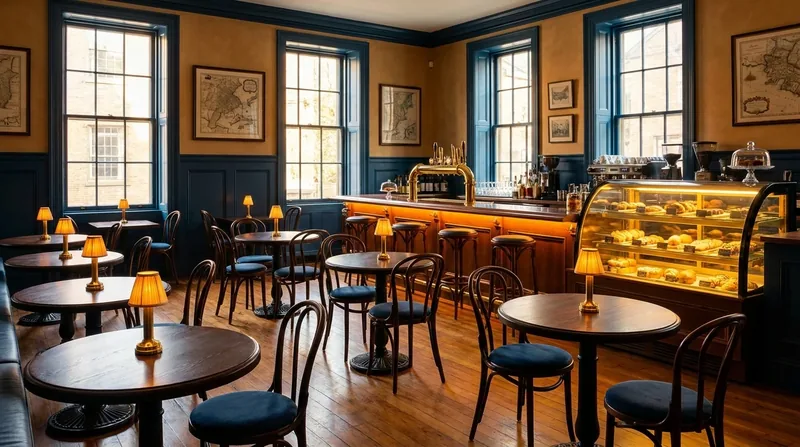
How to Start a Restaurant in Omaha NE: 7.0% Sales Tax Plus 2.5% City Restaurant Tax, Douglas County Health Permit and Liquor Recommendation
How to Start a Restaurant in Omaha NE: 7.0% Sales Tax Plus 2.5% City Restaurant Tax, Douglas County Health Permit and Liquor Recommendation
If you are researching how to start a restaurant in Omaha, the short version is this: you will register with the state for sales tax, form your business with the Secretary of State, pay two layers of tax on every check, and get your food permit from Douglas County rather than the state. Nebraska has no general state business license and no county business license. Registrations follow your activity instead. The Department of Revenue handles sales tax and withholding, the Secretary of State handles entities and trade names, and the city and county handle local taxes, zoning, food permits and liquor recommendations. This guide walks through the order that works for most Omaha operators.
Informational only: This article is general information, not legal or tax advice. Entity choice, tax treatment and lease terms can have large consequences, so talk with a qualified attorney and a CPA before you sign a lease or file anything. Fees and deadlines below reflect the sources cited and can change, so confirm them with the agency before you pay.
What You Need Before You Start
Gather these items before you file anything. Most delays come from missing documents, not from the agencies themselves.
- A written business plan with your concept, a draft menu, a price list and an opening budget that includes permit and tax costs
- A confirmed location and written confirmation from the City of Omaha that zoning allows a restaurant at that address
- A decision on business structure: an LLC or corporation, or operating as a sole proprietor until you form an entity
- A federal Employer Identification Number from the IRS
- A business bank account and a point-of-sale system that can show the city and state taxes as separate lines
- A signed lease with contingencies for permit approval and liquor recommendation
- Equipment specifications and a kitchen layout that you can share with the health department during plan review
Step 1: Choose and Form Your Business Entity
Most restaurant owners form a limited liability company. In Nebraska, the formation document is a Certificate of Organization. The filing fee is $100. You can file through the Secretary of State's eDelivery portal or by mail to Business Services in Lincoln. The Secretary of State does not publish a standard processing time, and staff review each document before filing, so build that uncertainty into your opening date.
Every LLC must maintain a Nebraska office and a registered agent, the Nebraska term for the person or company that receives legal papers for your business. The agent must be an individual who lives in Nebraska or an entity authorized to do business here, and the agent's office must match your registered office. If your agent lapses, the company can be administratively dissolved, which is a common and avoidable problem.
New LLCs must also publish a notice in a legal newspaper for three successive weeks and file proof of publication with the Secretary of State. The state does not set the newspaper's price, so request a quote before you file and budget for it separately.
The recurring filing is the biennial report. For an LLC, it is due in odd-numbered years between January 1 and April 1. The fee is $25 filed electronically or $30 on paper. The company becomes delinquent after June 16 and can be administratively dissolved after that.
If you form a corporation instead, the numbers differ:
| Item | Limited liability company | Corporation |
|---|---|---|
| Formation document | Certificate of Organization | Articles of Incorporation (you draft them; there is no state form) |
| Filing fee | $100 | $100 |
| Recurring filing | Biennial report, $25 online or $30 on paper, odd years, due April 1 | Biennial Report and Occupation Tax, due March 1 of even years |
| Recurring fee | $25 or $30 | $26 minimum; the tax rises with paid-up capital stock above $10,000 |
| Delinquency | After June 16 | After April 15 |
| Nebraska income tax | Pass-through to members' individual returns (2026 rates 2.46% to 4.55%), unless taxed as a corporation | 4.55% corporate income tax for tax years beginning on or after January 1, 2026 |
Entity choice affects taxes, liability and how you bring in investors, so this is a good place to involve a CPA and an attorney.
Step 2: Pick a Name That Passes Nebraska Rules
Under Neb. Rev. Stat. 21-108, an LLC name must include the words limited liability company or limited company, or an abbreviation such as LLC, L.L.C., LC or L.C. You may abbreviate limited as Ltd. and company as Co. The name cannot be the same as or deceptively similar to a name already on record with the Secretary of State unless the prior owner consents in a signed record or a court judgment grants the right to use it. Extra restrictions apply to certain words, including bank, trust, engineer, architect, land surveyor, cooperative, geologist, Olympic and barber, so avoid those words unless you have verified you qualify.
If you need time to finish paperwork, a name reservation costs $30 and lasts 120 days.
Your legal entity name and your public restaurant name do not have to match. If you open under a brand name, such as operating a grill under a separately named LLC, you need a trade name registration. Trade names are registered with the Secretary of State on a statewide basis, not county by county. The fee is $100 online through eDelivery or $110 in office or by mail. Renewal is $110. You must also publish the trade name in a newspaper, and the affidavit or proof of publication carries no state fee. Trade names last 10 years.
Step 3: Register With the Nebraska Department of Revenue
Nebraska does not issue a general business license. Instead, you register for the activities you actually conduct. A restaurant that makes retail sales, which includes every meal and drink you sell, needs a Nebraska sales and use tax permit. You can register online through the Department of Revenue's new business page at revenue.nebraska.gov, or by Form 20. Your Nebraska ID is the account number the department uses for your sales tax and withholding accounts.
Once you have employees, you also need an income tax withholding certificate. Register with the Department of Labor for unemployment tax when you hire. Confirm the exact timing for each filing with the agency, since your first payroll date can differ from your opening date.
The main Department of Revenue site is at revenue.nebraska.gov. The state sales tax rate is 5.5%.
Step 4: Set Up the Omaha Restaurant Tax Stack
Omaha restaurants pay two layers of tax that you must set up correctly before opening:
- City restaurant and drinking place occupation tax: 2.5% of gross receipts. This tax has applied since October 1, 2010. The Nebraska courts upheld it as an occupation tax in Anthony, Inc. v. City of Omaha (2012).
- Sales tax: 7.0% total. This is the 5.5% state rate plus 1.5% city sales tax.
The Department of Revenue's guidance is to figure the occupation tax first, then apply sales tax to that subtotal. Show the two taxes as separate lines on every receipt. Here is an illustrative check with a $40.00 food and drink sale:
| Line | Amount |
|---|---|
| Food and drink sales | $40.00 |
| Omaha restaurant occupation tax (2.5% of $40.00) | $1.00 |
| Subtotal | $41.00 |
| Sales tax (7.0% of $41.00) | $2.87 |
| Total | $43.87 |
A common error is applying 7.0% to the pre-occupation-tax price. On that $40.00 sale, the sales tax would come to $2.80 instead of $2.87, so the mistake underpays every check. Test your point-of-sale system with several sample tickets before opening.
For questions about reporting, filing frequency or how the occupation tax should appear on your records, contact Omaha Finance at 402-444-4945.
Step 5: Get a Douglas County Health Permit
Food permits for Omaha restaurants come from the Douglas County Health Department (DCHD) at 402-444-7480, not the Nebraska Department of Agriculture. Food permitting is local, so confirm the health authority for any address you consider. Do not assume a permit from one county or city carries over to another.
Permits renew by December 31. An unpermitted food business can be closed. As of early 2026, the reopening fee after a closure is $237. Confirm the current amount with DCHD. Also ask DCHD for the initial restaurant permit fee, the plan review process, the documents it needs with your kitchen layout, and whether an inspection must happen before you open. Those details are not settled figures in this guide, so get them in writing.
If you plan to sell packaged foods wholesale or make products for other businesses, ask the Nebraska Department of Agriculture whether a separate permit applies. That is a different question from your restaurant permit.
Step 6: Secure the Liquor Recommendation and License
If you plan to sell beer, wine or spirits, you need a retail liquor license from the Nebraska Liquor Control Commission at lcc.nebraska.gov. The state license is only part of the process. The Liquor Control Commission works with the city or county that grants the retail license, and the city council has 45 days to recommend or decline under Neb. Rev. Stat. 53-131. Ask the city clerk how the recommendation is scheduled, and build that window into your timeline.
The state renewal fee is $45 under Neb. Rev. Stat. 53-131, in addition to the license fee itself. This guide does not list the initial application fee or the forms, so check with the Liquor Control Commission for current amounts, required documents and background requirements before you apply. Do not sign a lease without a liquor contingency if your concept depends on alcohol sales.
Step 7: Confirm Trade Permits, Zoning and Inspections
Restaurant buildouts often trigger several separate approvals. Plan for each one:
- Electrical work: The State Electrical Division licenses electricians. Confirm that your electrical contractor holds the required license before work begins.
- Plumbing work: Plumbers are licensed by the city or village nearest the job site. For an Omaha location, that means the City of Omaha. Confirm plumbing permit requirements with the city before you schedule rough-in work.
- Zoning: City and county zoning controls how a property can be used. Confirm restaurant use, parking and hours with the City of Omaha before you sign a lease.
- Signage: Ask the city whether your sign needs a separate permit.
Because Nebraska has 93 counties and 528 cities and villages, rules change from one location to the next. An address a few miles away can fall under different authorities, so verify the jurisdiction for each address you consider.
Step 8: Set Up Insurance, Banking and Free Advising
Talk with an insurance agent about general liability and property coverage before you sign a lease, since landlords often require proof of coverage. Ask about workers' compensation requirements when you plan to hire.
For practical guidance, the Nebraska Business Development Center at the University of Nebraska at Omaha provides business start and growth support at unomaha.edu. The U.S. Small Business Administration also lists its Nebraska district resources at sba.gov/district/nebraska.
Other Nebraska Cities Charge Different Restaurant Taxes
If you are weighing a location outside Omaha, do not assume the 2.5% figure applies. Other cities levy their own restaurant taxes. Confirm current rates with each city before you set menu prices:
- Lincoln: 2%
- Norfolk: 2%
- Kearney: 1%
- La Vista: 1%
Expected Results and Realistic Timing
Restaurant outcomes vary widely with location, menu, pricing, labor and management. Nothing in this guide promises revenue, profit or a specific opening date. What a complete, well-organized filing package can reasonably do is reduce avoidable delays and keep your entity in good standing.
Your menu and marketing carry their own compliance requirements. If you describe nutrition or health benefits, keep claims accurate and hedged, and check FDA labeling guidance before you publish them. Avoid language suggesting a dish can cure, prevent or treat a condition.
Common Mistakes to Avoid
- Forming the LLC but skipping the three-week newspaper publication and the proof filing
- Letting the registered agent or registered office lapse, which can lead to administrative dissolution
- Calculating sales tax on the price before the occupation tax
- Confusing the Douglas County health permit with a state Department of Agriculture permit
- Missing the December 31 permit renewal
- Missing the April 1 biennial report deadline in odd-numbered years
- Signing a lease before zoning, plumbing and liquor recommendation are confirmed
Tips for a Smoother Opening
- Create a single calendar with every agency deadline, renewal date and filing window
- Ask each agency for its requirements in writing, including the name of the contact
- Set up your point-of-sale system and test the tax order before opening day
- Keep your Nebraska ID, permit numbers and registered agent information in one shared file
- Schedule the liquor recommendation and health plan review early, since they are the longest waits
Reminder: This article is informational, not legal or tax advice. Consult a qualified Nebraska attorney and CPA for your specific situation, and confirm every fee and deadline with the agency that administers it before you act.
Keep exploring: related Nebraska guides
- How to Start a Restaurant in Nebraska
- Food Trucks in Nebraska by City
- How to Start a Food Truck in Nebraska
- How to Start a Bakery Business in Nebraska
- Nebraska Liquor License Guide
- How to Start an LLC in Nebraska
- Nebraska Business License
- How Much Does It Cost to Start a Business in Nebraska
- All Nebraska business types
- Every Nebraska guide in one place