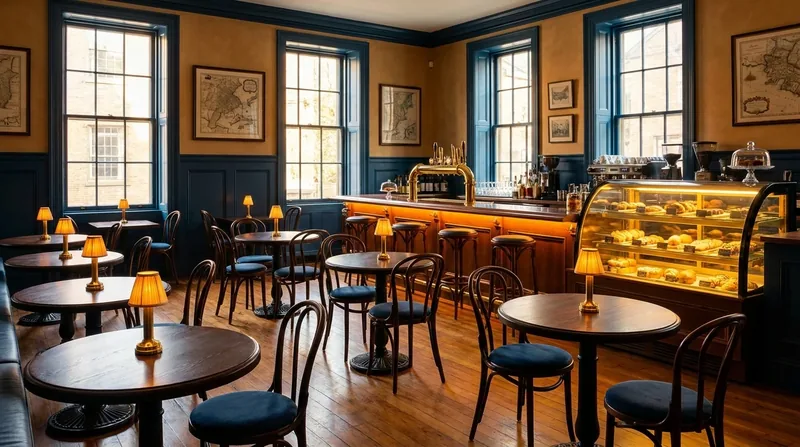
How to Start a Restaurant in Nebraska: NDA Permit With a $171 Annual Cap, the 60-Day Request Rule and a 2.5% Omaha Restaurant Tax
How to Start a Restaurant in Nebraska: NDA Permit With a $171 Annual Cap, the 60-Day Request Rule and Local Restaurant Taxes
If you are researching how to start a restaurant business in Nebraska, the first thing to know is that the state does not issue a general business license. Nebraska registers businesses by activity instead. You file your entity with the Secretary of State, register with the Department of Revenue for sales tax, obtain a food establishment permit from the Nebraska Department of Agriculture (NDA), and then work through your city or county on zoning, local taxes and any liquor license. Of these steps, the NDA permit is the one first-time owners most often underestimate, so it gets the most detail below.
Plan for several months between your first filing and opening day. The NDA timeline, which starts about 60 days before your target opening, often sets the pace.
What You Need Before You Start
Gather these items before you file anything, so you are not stopping mid-process to hunt for a document.
- A business name you have checked in the Secretary of State business search
- A registered agent with a Nebraska office. Every LLC must maintain one, and the agent must be an individual who resides in Nebraska or an entity authorized to transact business in the state.
- A draft of your entity document: a Certificate of Organization for an LLC or Articles of Incorporation for a corporation
- A federal Employer Identification Number (EIN) from the IRS
- A scaled floor plan showing sinks, cooking equipment, cold storage, dry storage and prep areas. New sites go through plan review, so this drawing is not optional.
- A written menu and a rough count of preparation areas, since the NDA fee structure depends on how many you have
- A target opening date, so you can count back 60 days for the NDA request
- A budget that includes filing fees, permit fees, newspaper publication costs and a reserve for delays
Step 1: Form Your Entity With the Secretary of State
Most independent restaurants form a limited liability company (LLC). The LLC filing is a Certificate of Organization, and the filing fee is $100 online or $110 on paper. Nebraska charges no expedited or same-day fee for business filings, so the best way to move faster is a complete, error-free submission. The Secretary of State publishes no standard processing time, and staff review each document before filing. Submit through the Corporate & Business Document eDelivery portal or by mail to Business Services in Lincoln.
Your name must include the words limited liability company or limited company, or an abbreviation such as LLC, L.L.C., LC or L.C. (Neb. Rev. Stat. 21-108). It cannot be the same as or deceptively similar to a name already on record. Certain words, including bank and trust, carry extra restrictions, so avoid them unless you have checked. If you need to hold a name while you finish paperwork, a name reservation costs $30 and lasts 120 days.
Nebraska also requires new LLCs and corporations to publish a notice in a legal newspaper for three successive weeks, then file proof of publication with the Secretary of State. The newspaper sets its own price, so request a quote before you assume the cost, and build the three-week window into your timeline.
If you choose a corporation instead, the filing is Articles of Incorporation, also $100. You draft that document yourself, and the state has no official form. Corporations also file a Biennial Report and Occupation Tax in even-numbered years, due March 1 and delinquent after April 15. The $26 figure is the minimum occupation tax, and it rises with paid-up capital stock above $10,000.
If You Operate Under a Different Name
If the restaurant will trade under a name other than your legal entity name, register a trade name with the Secretary of State using the Application for Registration of Trade Name. It costs $100 online through eDelivery or $110 in office or by mail, and renewal is $110. Trade names last 10 years. Like the entity filing, a trade name requires a separate newspaper publication, though the proof of publication carries no fee.
Registered agent changes also carry a cost. Updating your agent or office costs $25 online or $30 on paper. Losing your agent can lead to administrative dissolution, so set a reminder to confirm the agent is still in place.
Step 2: Register With the Department of Revenue
Register for a Nebraska sales and use tax permit before you open. A restaurant makes retail sales, so you need one. The state sales tax rate is 5.5%, and prepared food is taxable. If you have employees, you also need an income tax withholding certificate. Start your registration through the Department of Revenue online registration, and you will receive a Nebraska ID for sales tax and withholding.
Step 3: Register With the Department of Labor
If you will hire employees, register with the Nebraska Department of Labor for unemployment tax before your first payroll. The same agency handles contractor registration, so ask them if you plan to use independent contractors for delivery, cleaning or maintenance work.
Step 4: Check Trade and Occupational Licensing
Nebraska licenses by trade and by agency, not through a single state license. The State Electrical Division licenses electricians, so any electrical work in your build-out must be done by a licensed electrician. Plumbers are licensed by the city or village nearest the job, so ask that local office what it requires before you hire a plumber for sinks, grease interceptors or water lines.
Step 5: Confirm Zoning, Local Taxes and Liquor Rules
Zoning is handled by the city, or by the county if the property is outside city limits. Confirm in writing that the address is zoned for food service before you sign a lease. Nebraska has 93 counties and 528 municipalities (cities and villages), and the local office that controls your address is the one that matters.
Local taxes are where many first-time owners get surprised. Cities may levy restaurant occupation taxes on top of state and local sales tax. Under Department of Revenue guidance, the sales tax applies to the meal plus any itemized occupation tax, so your point of sale must show it correctly. Kearney's voter-approved restaurant tax is 1%. Before you set menu prices, confirm with the Omaha and Lincoln finance offices whether restaurant taxes apply in those cities and what the current rates are.
If you plan to serve beer, wine or spirits, the Liquor Control Commission works with the city or county that grants retail licenses. Contact the city clerk or county clerk early, because the local office is part of the process.
Step 6: Get Your Food Establishment Permit From the NDA
The Nebraska Department of Agriculture permits food establishments under the Nebraska Pure Food Act. It is not the county and not DHHS. One exception applies: retail sites in Douglas, Lancaster and Hall counties are handled by their local health departments. If your site is in one of those counties, contact that department and ask for its fees and process.
The 60-Day Request Rule
Email the completed NDA Request for Permit to [email protected] about 60 days before your target opening. The NDA confirms receipt within 10 business days, and an inspector may contact you within 30 days. Build your lease, construction and hiring schedule around that window. A late request can push your opening, because inspection must happen before you open.
Plan Review and Inspection
New sites go through plan review. Send your floor plan and equipment details early enough that review finishes before you commit to construction. Ask the NDA to confirm what it needs and when it needs it. Inspection must take place before you open for business.
What the Permit Costs
The $171 figure is a ceiling, not a bill. Nebraska Revised Statutes 81-2,270 set maximum fees, and the NDA sets the actual fees each July 1 at or below those caps. Confirm the current billed amounts with the NDA before you finalize your budget.
| Item | Figure | Status |
|---|---|---|
| Initial permit | Up to $122 | Statutory maximum; confirm the billed amount |
| Base annual fee, general food establishment | Up to $171 | Statutory maximum; NDA sets the actual fee each July 1 |
| Each additional preparation area | Up to $61 per area | Statutory maximum; confirm how many areas NDA counts for your plan |
| Operating before the permit is issued | Adds $60 | Stated charge |
| Late annual payment | 50%, then 100% | Stated penalties |
Annual fees are due August 1. If an annual fee goes unpaid, the late penalties apply, and the permit becomes void after 90 days unpaid.
Permit Rules That Catch Owners Off Guard
Food establishment permits are non-transferable. If you buy an existing restaurant, the seller's permit does not come with the business. A change of owner or a change of location causes the permit to lapse, so a relocation or sale means a new permit application.
Step 7: Calendar Your Recurring Deadlines
Once you open, the state filings continue. Put these on your calendar the day you file:
- LLC Biennial Report: filed in odd-numbered years between January 1 to April 1, with a $25 electronic or $30 paper fee. Delinquent after June 16, when the company is administratively dissolved.
- Corporation Biennial Report and Occupation Tax: due March 1 of even-numbered years, delinquent after April 15
- NDA annual permit fee: due August 1 each year
- Registered agent: confirm the agent and office are still in place every year
Common Mistakes to Avoid
- Signing a lease before confirming zoning. Get written confirmation from the city or county first.
- Treating $171 as your bill. It is the statutory ceiling for the base annual fee. NDA sets the actual amount each July 1.
- Sending the NDA request late. Start about 60 days before your target opening.
- Opening before the permit is issued. Operating before a permit adds $60, and inspection must happen first.
- Assuming a permit transfers with a purchase. Permits are non-transferable.
- Missing the LLC biennial report. Odd-numbered years, January 1 to April 1, with delinquency after June 16.
- Letting the registered agent lapse. Losing the agent can lead to administrative dissolution.
- Skipping the newspaper publication. Three successive weeks in a legal newspaper, then proof filed with the Secretary of State.
- Setting menu prices before checking local taxes. Restaurant taxes can change the price customers pay at the register.
What to Expect From the Process
Expect the Secretary of State filing to move quickly if your paperwork is complete, though the state publishes no standard processing time. Expect the NDA process to take longer than a week, since the agency confirms receipt within 10 business days and may contact you within 30 days. Expect a permitted, inspected kitchen to help you meet state food safety requirements, but it does not guarantee that every meal will be free of illness. Your daily food handling and sanitation practices still determine much of the outcome. Timelines and costs vary by site, so treat these as planning estimates, not promises.
Helpful Resources
- Nebraska Secretary of State, Business Services Division
- Nebraska Department of Revenue
- Nebraska Business Development Center (Nebraska SBDC), University of Nebraska at Omaha
- SBA Nebraska district office
Important Note
This article is informational only. It is not legal, tax or food safety advice. Fees, rates and deadlines change, so confirm current figures with the named agency before you rely on them. Restaurant formation involves leases, personal liability, tax registration and alcohol licensing, so consult a qualified Nebraska attorney and a CPA before you sign a lease or commit funds.
Keep exploring: related Nebraska guides
- How to Start a Food Truck in Nebraska
- How to Start a Restaurant in Omaha NE
- How to Start a Farmers Market or Farm Stand Business in Nebraska
- Food Trucks in Nebraska by City
- Nebraska Liquor License Guide
- How to Start an LLC in Nebraska
- Nebraska Business License
- How Much Does It Cost to Start a Business in Nebraska
- All Nebraska business types
- Every Nebraska guide in one place