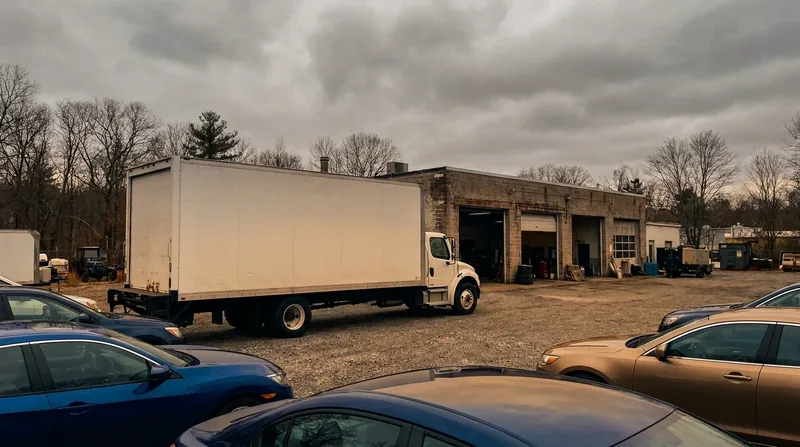
How to Start a Used Car Dealership in Nebraska: MVILB License, $50,000 Bond, 8 Hours of Education From 2026 and the Landline Rule
How to Start a Used Car Dealership in Nebraska: MVILB License, $50,000 Bond, 8 Hours of Education From 2026 and the Landline Rule
A used car dealership in Nebraska starts with a dealer license from the Nebraska Motor Vehicle Industry Licensing Board (MVILB), which licenses dealers under the Motor Vehicle Industry Regulation Act, Neb. Rev. Stat. 60-1401 to 60-1441. The process is well defined, but most delays come from a few details: a working landline listed under the exact dealership name, a $50,000 surety bond on the Attorney General approved form, an education requirement that took effect in 2026, and premises rules that an MVILB investigator checks in person before approval.
This guide covers the order that works, what to gather before you start, and where applicants usually get stuck. Look for the Secretary of State business search and the Department of Revenue site as you go, since you will use both.
Informational content only. This article is not legal or tax advice. Fees, forms and deadlines change. Confirm every figure with the agency named before you spend money, and talk with a Nebraska attorney and a CPA about your entity, lease, insurance and tax setup.
What Nebraska Requires for a Used Car Dealer
Nebraska has no general state business license and no county business license. Registration follows the activity you engage in. For a used car lot, the central state license is your MVILB dealer license. One dealer license covers new and used cars, motorcycles and trailers. Your legal entity is filed with the Secretary of State, your sales tax registration is handled by the Department of Revenue, and your zoning approval comes from the city or county where the lot sits. Cities may also levy their own sales or occupation taxes, so check locally.
Materials and Documents to Gather
Assemble these before you file anything. Most delays happen when one item is missing from the packet.
- A business name that meets Nebraska entity rules and the MVILB restriction on words like discount, wholesale and “for less.”
- A Nebraska registered agent with a Nebraska office. Every LLC must designate and maintain one under Neb. Rev. Stat. 21-113.
- A federal Employer Identification Number (EIN) from the IRS.
- A qualifying lot with business hours, a permanent sign and a display area for ten or more vehicles.
- A zoning permit or zoning letter from the city or county.
- A working landline listed in the exact dealership name.
- A service facility in the same county, or a service agreement with one.
- An auto liability insurance certificate and a workers' compensation certificate or waiver.
- A $50,000 surety bond on the Attorney General approved form, signed by a Nebraska registered agent.
- Education certificates for 8 hours of approved training, dated within 12 months of your application.
- The dealer fee, which you must confirm with MVILB before filing.
Step-by-Step: Starting Your Nebraska Used Car Dealership
Step 1: Choose a name that passes both rules
Your name does two jobs. It identifies your LLC with the Secretary of State, and it appears on your MVILB license, your landline listing and your sign. Choose it once and use it everywhere.
Under Neb. Rev. Stat. 21-108, an LLC name must contain “limited liability company” or “limited company,” or the abbreviation LLC, L.C. or LC. “Limited” may be abbreviated as Ltd. and “company” as Co. The name cannot be the same as, or deceptively similar to, a name already on record with the Secretary of State, unless the prior owner consents in a signed record or a court judgment gives you the right to use it. Search the Secretary of State business database before you commit.
For MVILB purposes, the name may not use discount, wholesale or “for less.” Reserve the name while you gather paperwork if you need time. The Secretary of State offers a 120-day name reservation for $30, using the Application for Reservation (LLC).
Step 2: Form the LLC
Most dealers form a limited liability company. The filing is a Certificate of Organization (Limited Liability Company), with a $100 filing fee. You can file through the Corporate and Business Document eDelivery portal or by mail to Business Services in Lincoln. Filings are submitted as signed PDFs, and staff review each document before it is filed.
The Secretary of State does not publish a standard processing time, so plan for variable turnaround rather than a fixed date. Two more requirements apply to new LLCs. First, you must designate a registered agent, the term Nebraska uses for the agent who accepts legal papers for the company. The agent must be an individual who resides in Nebraska or an entity authorized to transact business here, and the agent's office must be identical to the registered office. Second, you must publish a notice in a legal newspaper for three successive weeks and file proof of publication with the Secretary of State. Publication rates vary by newspaper, so request a quote before you file.
Step 3: Register a trade name if you will sell under a different name
If the public will know your dealership by a name other than your LLC name, you can register a trade name (registration is optional). It costs $100 when filed online through eDelivery and $110 when filed in the office or by mail. Renewal costs $110 on paper or $100 electronically. The filing requires a separate newspaper publication, and the registration lasts 10 years. Use the Application for Registration of Trade Name. Registration is statewide, not county by county.
The trade name you register must match the name on your MVILB application and your landline listing. Mismatched names are an easy way to create a rework cycle.
Step 4: Confirm zoning before you sign a lease
Start zoning early, because it is the step most likely to change your location plans. Call the planning or zoning office for the city or county where the lot sits. Ask whether a used car dealership is a permitted use in that zone, and request a zoning permit or a letter confirming the use. The MVILB application requires one or the other.
Nebraska has 93 counties and 528 municipalities (cities and villages). A lot inside city limits falls under city zoning. A lot outside city limits generally falls under county zoning. Ask about city sales tax and city occupation tax at the same time, since both vary by place.
Step 5: Build the lot to MVILB premises rules
The MVILB investigator will check the premises against the rules, so build to them before you schedule the inspection:
- Hours: Open at least 40 hours a week, with 20 of those hours between 8 a.m. and 5 p.m.
- Sign: A permanent sign with letters at least 8 inches high. A temporary banner is not a permanent sign.
- Display area: One contiguous display area for ten or more vehicles.
- Service: A service facility in the same county as the dealership, or a service agreement with one.
- Zoning: The zoning permit or letter described in Step 4.
Step 6: Install the landline and finalize the listing
The MVILB requires a working landline listed in the exact dealership name. Order the line from your phone provider well before the inspection, and confirm that the directory listing reads exactly like your license application, including punctuation and abbreviations. Test the line on inspection day. A dead line or a listing under a different name can stall approval.
Step 7: Register your sales tax and employer accounts
Nebraska's state sales tax rate is 5.5 percent. A dealership makes retail sales, so it needs a Nebraska sales and use tax permit. Register through the Department of Revenue online registration, which issues your Nebraska ID for sales tax purposes.
If you will have employees, you also need an income tax withholding certificate from the Department of Revenue, and you must register for unemployment tax with the Nebraska Department of Labor. Vehicle sales have their own reporting questions, so confirm how your deals are taxed and reported with the Department of Revenue or a CPA before you open.
Step 8: Secure insurance and workers' compensation
Buy auto liability insurance and obtain a certificate to submit with your application. The application accepts a workers' compensation certificate or a waiver. Ask MVILB which option applies to your situation, because the right answer depends on whether you will have employees.
Step 9: Post the $50,000 surety bond
Under Neb. Rev. Stat. 60-1419, a used car dealer must file a $50,000 surety bond on the Attorney General approved form, signed by a Nebraska registered agent. Auction dealers need a $100,000 bond. The bond is not a state fee you pay directly. You pay a premium to the bonding company, and that premium varies, so request quotes from more than one surety.
Use the current Attorney General form. An outdated version can delay your application, so confirm the version with MVILB before you have it signed.
Step 10: Complete 8 hours of education
Under Neb. Rev. Stat. 60-1408, a new non-franchise dealer must complete 8 hours of education, effective January 1, 2026. Trailer-only dealers are exempt. The certificates must be dated within 12 months of your application, so do not finish the course months before you file. Renewal requires 4 hours. Confirm that the course provider is approved for MVILB credit before you pay for it, and keep the certificates with your application packet.
Step 11: Submit the application, pay the fee and pass the inspection
Submit the MVILB dealer application with your entity documents, zoning permit or letter, bond, insurance certificates, education certificates and fee. The statute caps the dealer fee at $1,000, and the board sets the actual amount. An older board application form listed $250, but that figure may no longer apply. Call MVILB at 402-471-2148 to confirm the current fee before you file.
An MVILB investigator inspects the lot before approval. Expect the inspection to cover the landline, sign, display area, posted hours, zoning documents and service arrangement. Walk the lot yourself with the checklist in this guide first, and have your phone line and sign finished before you request the visit.
If you also plan to tow or dismantle vehicles, the MVILB licenses wrecker and salvage dealers. That is a separate license, and the statute caps its fee at $500.
Step 12: Keep the license and the entity in good standing
Your dealer license expires December 31 and is renewed every year. Renewals open October 1. Each renewal requires 4 hours of education.
Keep your Secretary of State filings current as well. An LLC files a biennial report in odd-numbered years, between January 1 and April 1, at $25 online or $30 on paper. A report that is not filed by June 16 is delinquent, and the company is then administratively dissolved. Keep your registered agent in place, too. Losing the agent can lead to administrative dissolution, and changing the agent or office costs $25 online or $30 on paper.
What It Costs
The table below lists the fees that apply. Where a figure is not set by the state, the table says so.
| Item | Cost | Agency |
|---|---|---|
| LLC Certificate of Organization | $100 filing fee | Secretary of State |
| Name reservation (120 days) | $30 | Secretary of State |
| Trade name registration | $100 online, $110 in office or by mail | Secretary of State |
| Trade name renewal | $110 on paper, $100 electronically | Secretary of State |
| LLC biennial report (odd years) | $25 online, $30 on paper | Secretary of State |
| Registered agent change | $25 online, $30 on paper | Secretary of State |
| Dealer license fee | Statute caps at $1,000. Confirm the current fee. | MVILB, 402-471-2148 |
| $50,000 surety bond | Premium set by the bonding company. Not a state fee. | Bonding company |
| Education (8 hours new, 4 hours renewal) | Varies by provider. Confirm the course is approved. | Approved provider, MVILB |
| Sales and use tax permit | Confirm with the agency | Department of Revenue |
| Wrecker or salvage dealer license | Statute caps at $500. Confirm the current fee. | MVILB |
Common Mistakes to Avoid
- Listing the landline under a slightly different name. The MVILB requires the exact dealership name, so match the phone listing to the application character for character.
- Using a restricted word in the name. Discount, wholesale and “for less” are not allowed. Check the name before you pay for signage.
- Finishing education too early. Certificates must be dated within 12 months of your application.
- Using an outdated bond form. Confirm you have the current Attorney General approved form and that it is signed by a Nebraska registered agent.
- Setting hours that fall short. Forty hours a week is the minimum, and 20 of those hours must fall between 8 a.m. and 5 p.m.
- Installing a small or temporary sign. Letters must be at least 8 inches high on a permanent sign.
- Skipping zoning until the end. A lot that cannot be permitted for the use wastes the lease, the sign and the phone line.
- Forgetting the service arrangement. You need a service facility in the same county or a service agreement with one.
- Letting the registered agent lapse. Losing the agent can lead to administrative dissolution.
- Assuming a state business license exists. Nebraska has none for general business. Your MVILB dealer license, sales tax permit and entity filings are the core requirements.
Expected Results and Timeline
If you complete these steps in order, you can reasonably expect to reach the MVILB inspection with a complete file and fewer surprises. Results are not guaranteed. The board's review, the zoning status of your lot, the bond process and your education schedule can each change your timeline. Neither this guide nor the Secretary of State publishes a fixed processing time for the MVILB, so call the board for its current timing and build a buffer into any lease start date or inventory purchase.
Applicants who file the LLC, trade name and zoning requests first, then complete education and the bond, tend to avoid the most common restarts. Starting with the lot or the sign before zoning and the name are settled is the most common way to lose money.
Next Steps and Resources
Work through the steps in order, and keep a single folder with every certificate, receipt and confirmation number. If you want help with the business plan or the numbers, the Nebraska Business Development Center at the University of Nebraska at Omaha offers start-up guidance. For entity structure, contracts and lease terms, consult a Nebraska attorney. For how vehicle sales, payroll and entity elections affect your taxes, consult a CPA. This article is informational only and is not legal or tax advice.